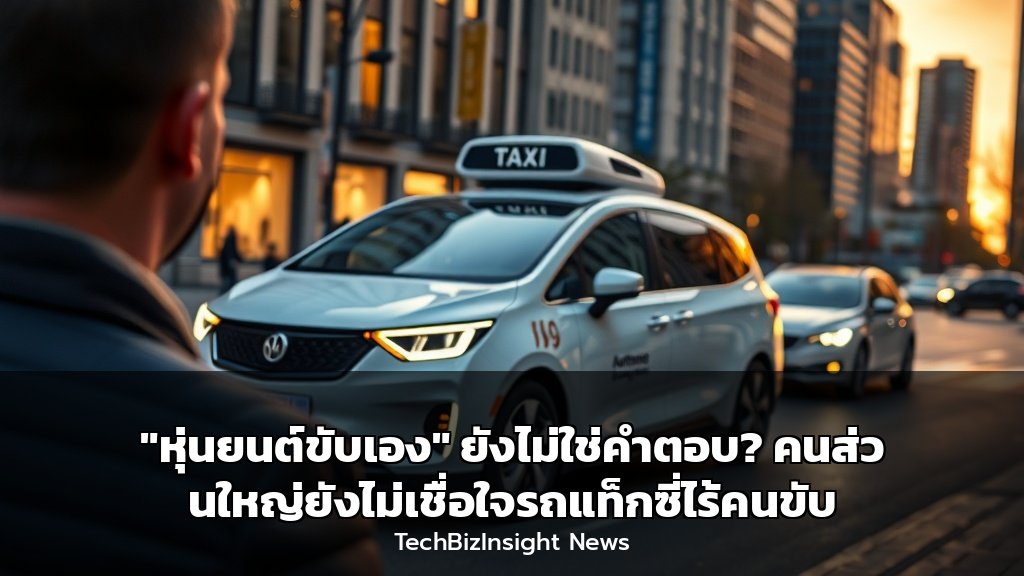
“หุ่นยนต์ขับเอง” ยังไม่ใช่คำตอบ? คนส่วนใหญ่ยังไม่เชื่อใจรถแท็กซี่ไร้คนขับ
บทนำ
ความฝันเรื่องเมืองอัจฉริยะที่เต็มไปด้วยรถยนต์ไร้คนขับกำลังเผชิญกับอุปสรรคสำคัญที่ไม่ใช่แค่เทคโนโลยีล้วนๆ แต่คือ “ความเชื่อมั่น” จากผู้ใช้บริการ ผลสำรวจความคิดเห็นล่าสุดจากหลายสำนักยืนยันเสียงเดียวกันว่า สาธารณชนส่วนใหญ่ยังคงรู้สึกไม่ปลอดภัยและไม่พร้อมจะใช้บริการรถแท็กซี่ไร้คนขับหรือโรโบแท็กซี่ แม้บริษัทเทคโนโลยียักษ์ใหญ่จะลงทุนมหาศาลและทดสอบมาอย่างยาวนานกว่าทศวรรษก็ตาม ความก้าวหน้าทางวิศวกรรมและซอฟต์แวร์ที่ก้าวกระโดด ดูเหมือนจะยังไล่ตามความกังวลในใจของผู้บริโภคไม่ทัน ส่งสัญญาณให้อุตสาหกรรมต้องทบทวนกลยุทธ์การสื่อสารและการออกแบบประสบการณ์ผู้ใช้อย่างจริงจัง
การวิเคราะห์เชิงลึก: ความไม่เชื่อมั่นที่ส่งผลกระทบต่อธุรกิจและเทคโนโลยี
ความลังเลของสาธารณชนไม่ใช่แค่ประเด็นทางสังคม แต่เป็นปัจจัยชี้ขาดทางธุรกิจที่ส่งผลกระทบเป็นลูกโซ่ต่ออุตสาหกรรม Mobility Tech อย่างมีนัยสำคัญ การที่ผู้บริโภคไม่ยอมรับในระดับกว้าง ทำให้โมเดลธุรกิจที่วางอยู่บนฐานผู้ใช้จำนวนมากและอัตราการใช้บริการสูง (High Utilization Rate) ต้องล่าช้าออกไปอย่างไม่มีกำหนด สิ่งนี้กระทบโดยตรงต่อ
* การไหลเวียนของเงินทุน: นักลงทุนเริ่มตั้งคำถามกับระยะเวลาคืนทุนที่ยืดเยื้อออกไปเรื่อยๆ การระดมทุนในสตาร์ทอัพด้าน autonomous driving อาจทำได้ยากขึ้น หากไม่สามารถแสดงให้เห็นถึงการยอมรับจากตลาด (Market Traction) ที่ชัดเจน
* การปรับกลยุทธ์ผลิตภัณฑ์: บริษัทต่างๆ ถูกบีบให้ต้องหันไปพึ่งพาการประยุกต์ใช้เทคโนโลยีในส่วนอื่นก่อน เพื่อสร้างรายได้และพิสูจน์ความน่าเชื่อถือของระบบ เช่น การขนส่งสินค้าในพื้นที่จำกัด (Geo-fenced Logistics), การขับขี่อัตโนมัติบนทางหลวง (Highway Autopilot) สำหรับรถยนต์ส่วนบุคคล ซึ่งมีความซับซ้อนน้อยกว่าและได้รับการยอมรับมากกว่า
* ความท้าทายด้านซอฟต์แวร์และข้อมูล: หัวใจของรถไร้คนขับคือ AI และซอฟต์แวร์ที่เรียนรู้จากข้อมูลจริงจำนวนมหาศาล (Big Data) การที่รถทดสอบออกวิ่งบนถนนสาธารณะได้จำกัด เนื่องจากข้อกฎหมายและความกังวลของสังคม ส่งผลให้ชุดข้อมูล (Dataset) ที่ใช้ฝึกระบบอาจไม่ครอบคลุมสถานการณ์ “ขอบเขต” (Edge Cases) ที่หลากหลายพอ ซึ่ง замедพัฒนาการเรียนรู้ของ Machine Learning Models
* การออกแบบประสบการณ์ผู้ใช้ (UX): ความท้าทายเปลี่ยนจาก “ทำให้รถขับเองได้” เป็น “ทำให้ผู้โดยสารรู้สึกปลอดภัยและควบคุมได้” นี่นำไปสู่การลงทุนด้านซอฟต์แวร์สำหรับ Human-Machine Interface (HMI) ใหม่ๆ เช่น หน้าจอแสดงเส้นทางและการรับรู้ของรถแบบเรียลไทม์ ปุ่มเรียกช่วยเหลือฉุกเฉินที่เชื่อมต่อกับศูนย์ควบคุมโดยมนุษย์ ซึ่งเป็นการเพิ่มต้นทุนและความซับซ้อนทางวิศวกรรมซอฟต์แวร์อีกชั้นหนึ่ง
ประเด็นความน่าเชื่อถือนี้ชี้ให้เห็นว่า การพิชิตตลาด Mobility แห่งอนาคต ไม่ได้ชนะด้วยฮาร์ดแวร์และอัลกอริทึมที่ล้ำสมัยที่สุดเท่านั้น แต่ต้องชนะที่ “ความเชื่อใจ” (Trust) ซึ่งเป็นสินทรัพย์ที่สร้างได้ยากยิ่ง การรายงานข่าวจาก The Verge ยังคงติดตามพัฒนาการและความท้าทายของอุตสาหร์นี้อย่างต่อเนื่อง
Frequently Asked Questions (FAQ)
Q: สาเหตุหลักที่คนยังไม่ไว้ใจรถแท็กซี่ไร้คนขับคืออะไร?
A: สาเหตุหลักมาจากความกังวลด้านความปลอดภัยเมื่อต้องเผชิญกับสถานการณ์ที่ไม่คาดคิดบนท้องถนน (Edge Cases) เช่น สภาพอากาศเลวร้าย ถนนที่ซ่อมแซมไม่สมบูรณ์ หรือพฤติกรรมของคนเดินถนนและรถคันอื่นที่คาดเดาไม่ได้ ผู้คนยังรู้สึกสบายใจกว่าหากมีมนุษย์ที่น่าจะสามารถใช้ “สามัญสำนึก” ในการตัดสินใจได้ในวินาทีวิกฤต
Q: ความไม่เชื่อมั่นของสาธารณชนส่งผลต่อแผนธุรกิจของบริษัทเทคโนโลยีเหล่านี้อย่างไร?
A: ผลกระทบทางธุรกิจมีหลายด้าน ได้แก่ การชะลอการขยายบริการในเมืองใหญ่ การเปลี่ยนโฟกัสไปยังการใช้งานเชิงพาณิชย์ เช่น การขนส่งสินค้าแทนการขนส่งคนก่อน เพื่อลดความเสี่ยง และที่สำคัญคือ การเพิ่มความพยายามในการสื่อสารและสร้างความเข้าใจกับสาธารณะผ่านการแสดงข้อมูลความปลอดภัยและความสามารถของระบบอย่างโปร่งใส
The Persistent Public Skepticism Toward Robotaxis
For over a decade, the autonomous vehicle (AV) industry has promised a revolution in transportation. Yet, despite monumental technological leaps and billions in investment, a fundamental hurdle remains stubbornly high: profound and enduring public skepticism. Repeated surveys and polls consistently reveal that a majority of people are uncomfortable with the idea of riding in a fully driverless taxi, or “robotaxi.” This sentiment presents a critical business and technological challenge that extends far beyond engineering labs, impacting investment cycles, product strategy, and the very roadmap to commercialization.
Deep Dive Analysis: The Business Impact of Technological Mistrust
Public reluctance is not merely a social curiosity; it is a decisive business factor creating ripple effects across the Mobility Tech sector. Widespread consumer hesitation directly delays the high-utilization, scale-dependent business models that robotaxi companies are built upon. This skepticism triggers several consequential shifts:
- Capital Flow and Investment: The extended timeline to profitability is testing investor patience. Raising capital for AV startups becomes increasingly challenging without demonstrable market adoption and clear paths to positive unit economics. Investors are scrutinizing “burn rates” more closely against tangible progress in public acceptance.
- Strategic Pivots and Product Focus: Companies are compelled to pivot towards nearer-term, more palatable applications of their technology to generate revenue and build credibility. This includes geo-fenced autonomous logistics for warehouses and delivery, or advanced driver-assistance systems (ADAS/AVs) for consumer vehicles, which face less public resistance than fully driverless passenger service.
- Software and Data Development Challenges: The core of autonomous driving is AI software trained on vast amounts of real-world data. Limited public road testing due to regulatory and social constraints can result in less diverse training datasets. This potentially slows the AI’s ability to master rare “edge case” scenarios, creating a cyclical problem where limited exposure may hinder the very improvement needed to build trust.
- User Experience (UX) and Interface Design: The primary challenge evolves from “making the car drive” to “making the passenger feel safe and in control.” This necessitates significant investment in new Human-Machine Interface (HMI) software—such as real-time visualizations of the vehicle’s perception system, transparent communication of planned maneuvers, and reliable, instantaneous human support buttons. These features add layers of software complexity and cost.
This trust deficit highlights a pivotal insight: winning the future of mobility requires conquering not just technical challenges, but the psychological barrier of passenger trust. It underscores that the most sophisticated sensor suite and algorithm cannot succeed without social license.
Frequently Asked Questions (FAQ)
Q: What are the main reasons people still don’t trust robotaxis?
A: The primary reason is safety concern, particularly regarding the vehicle’s ability to handle unpredictable “edge cases” on the road, such as extreme weather, complex construction zones, or erratic behavior from pedestrians and other drivers. Many people feel more secure with a human driver who can theoretically apply common sense and nuanced judgment in critical moments.
Q: How does public skepticism affect the business plans of these tech companies?
A: The business impact is multi-faceted. It leads to slowed expansion into major metropolitan areas, a strategic shift towards commercial applications like goods delivery before passenger service to de-risk operations, and increased investment in public engagement and transparency campaigns to demonstrate safety records and system capabilities.