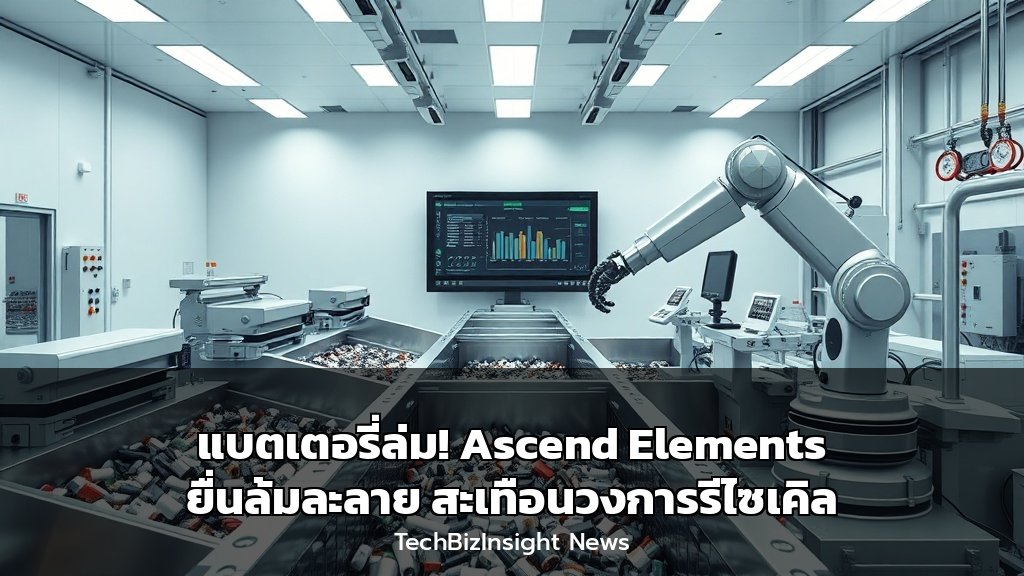
แบตเตอรี่ล่ม! Ascend Elements ยื่นล้มละลาย สะเทือนวงการรีไซเคิล
การประกาศยื่นล้มละลายของ Ascend Elements บริษัทรีไซเคิลแบตเตอรี่ลิเธียมไอออนรายใหญ่ สร้างความสั่นสะเทือนให้กับอุตสาหกรรมเทคโนโลยีสะอาดทั่วโลก สาเหตุหลักมาจากการที่รัฐบาลสหรัฐฯ ยกเลิกเงินสนับสนุนก้อนใหญ่ และภาวะตลาดแบตเตอรี่ยากลำบากที่ส่งผลกระทบต่อโมเดลธุรกิจ แม้บริษัทจะเคยได้รับการประเมินมูลค่าสูงถึง 1.6 พันล้านดอลลาร์และมีลูกค้ารายใหญ่เช่น Honda ก็ตาม การล่มสลายครั้งนี้ชี้ให้เห็นถึงความเปราะบางของธุรกิจสตาร์ทอัพด้านพลังงาน แม้จะอยู่ในเทรนด์แห่งอนาคต แต่ก็ยังต้องเผชิญกับความท้าทายด้านเงินทุนและสภาพตลาดที่ผันผวน
การล้มละลายของ Ascend Elements ไม่ใช่เพียงข่าวธุรกิจทั่วไป แต่เป็นเคสศึกษาที่สำคัญสำหรับแวดวงเทคโนโลยีและนักลงทุน โดยเฉพาะในประเด็นการพึ่งพาเงินสนับสนุนจากรัฐบาลและการเติบโตที่อาจเร็วเกินไปสำหรับตลาดที่ยังไม่โตเต็มที่
- ผลกระทบต่อห่วงโซ่อุปทานรถ EV: บริษัทมีแผนสร้างโรงงานรีไซเคิลขนาดใหญ่ในรัฐจอร์เจีย ซึ่งถูกมองว่าเป็นส่วนสำคัญของห่วงโซ่อุปทานรถไฟฟ้าในอเมริกาเหนือ การชะงักงันนี้อาจทำให้เป้าหมายการผลิตที่ใช้ทรัพยากรในประเทศ (onshoring) ล่าช้าออกไป
- ความท้าทายด้านตลาดและราคาวัตถุดิบ: ราคาลิเธียมและโคบอลต์ที่ปรับตัวลดลงอย่างมีนัยสำคัญในช่วงที่ผ่านมา ทำให้ต้นทุนของการรีไซเคิลแบตเตอรี่เก่า เทียบเคียงได้หรือบางครั้งสูงกว่าการซื้อวัตถุดิบใหม่ ส่งผลกระทบโดยตรงต่อความได้เปรียบทางเศรษฐกิจของธุรกิจรีไซเคิล
- บทเรียนสำหรับสตาร์ทอัพด้าน Climate Tech: กรณีนี้แสดงให้เห็นชัดเจนว่าการมีเทคโนโลยีที่ล้ำสมัยเพียงอย่างเดียวไม่เพียงพอ โมเดลธุรกิจต้องมีความยืดหยุ่น สามารถอยู่รอดได้ในสภาวะที่เงินสนับสนุนจากรัฐเปลี่ยนแปลงไป และต้องคำนวณความเสี่ยงจากความผันผวนของราคาวัตถุดิบในตลาดโลกได้อย่างแม่นยำ
- โอกาสสำหรับคู่แข่งและผู้เล่นรายใหม่: การ exit ของผู้เล่นรายใหญ่ย่อมทิ้งช่องว่างในตลาดไว้ บริษัทรีไซเคิลรายอื่นหรือแม้แต่ผู้ผลิตแบตเตอรี่และรถยนต์รายใหญ่ที่ต้องการควบคุมห่วงโซ่อุปทาน อาจมองนี่เป็นโอกาสในการเข้าซื้อทรัพย์สินทางปัญญา (IP) หรือแม้แต่โครงสร้างพื้นฐานในราคาที่ได้เปรียบ
การพัฒนาอุตสาหกรรมพลังงานสะอาดจำเป็นต้องอาศัยทั้งนวัตกรรม ความมุ่งมั่นทางการเงิน และนโยบายที่สม่ำเสมอ จากกรณีของ Ascend Elements แสดงให้เห็นว่าความไม่แน่นอนในปัจจัยใดปัจจัยหนึ่งก็สามารถส่งผลกระทบต่อบริษัทที่มีศักยภาพสูงได้ Reuters
Ascend Elements, a major player in lithium-ion battery recycling, has filed for Chapter 11 bankruptcy protection, sending shockwaves through the clean technology sector. The company cited the cancellation of a substantial U.S. government grant and a challenging battery market as primary reasons for its collapse. This development is particularly striking given that Ascend Elements was once valued at approximately $1.6 billion and counted automotive giants like Honda among its key customers. The bankruptcy underscores a critical vulnerability within the green tech startup ecosystem: even ventures operating in high-potential, future-facing industries are not immune to capital market pressures and volatile economic conditions.
This event transcends a simple business failure, serving as a significant case study on the intersection of technology, government policy, and market economics. It highlights the risks associated with scaling infrastructure ahead of sustainable market demand and over-reliance on non-dilutive government funding, which can be subject to political and procedural shifts.
- Impact on the EV Supply Chain: Ascend Elements was in the process of developing a large-scale recycling facility in Georgia, a project positioned as a cornerstone for a domestic electric vehicle battery supply chain in North America. This disruption could delay broader industry goals for onshoring critical material recovery and production.
- Market Challenges and Raw Material Pricing: A significant factor in the company’s struggles is the precipitous drop in the market prices of key battery metals like lithium and cobalt. This decline has, in many cases, reduced the cost of virgin materials to a point where the economic incentive for large-scale, advanced recycling is diminished, squeezing profit margins for recyclers.
- A Cautionary Tale for Climate Tech Startups: The bankruptcy demonstrates that breakthrough technology alone cannot guarantee commercial success. Business models in capital-intensive hardware sectors must exhibit robust resilience, with the ability to withstand shifts in government subsidy landscapes and accurately hedge against global commodity price volatility.
- Potential Opportunities for Competitors and Incumbents: The exit of a well-funded leader creates a vacuum. Other established recyclers, or even vertically-integrated battery manufacturers and automakers seeking greater supply chain control, may view this as a strategic opportunity to acquire valuable intellectual property, patents, or partially built infrastructure at a favorable cost.
The path to a sustainable energy future is built on innovation, committed financing, and stable policy frameworks. The case of Ascend Elements reveals how uncertainty in any one of these pillars can destabilize even the most promising ventures.
FAQ
บริษัท Ascend Elements ล้มละลายเพราะเหตุใด?
สาเหตุหลักมาจากสองปัจจัยร่วมกัน: 1) การที่กรมพลังงานสหรัฐฯ (DOE) ยกเลิกเงินสนับสนุนโครงการ (grant) ก้อนใหญ่ซึ่งเป็นแหล่งเงินทุนสำคัญสำหรับการขยายโรงงาน และ 2) สภาวะตลาดแบตเตอรี่ยากลำบาก โดยราคาวัตถุดิบลิเธียมและโคบอลต์ที่ตกต่ำ ทำให้ต้นทุนการรีไซเคิลแข่งขันกับวัสดุใหม่ได้ยาก ส่งผลต่อรายได้และโมเดลธุรกิจ
การล้มละลายนี้ส่งผลต่ออุตสาหกรรมรถไฟฟ้า (EV) อย่างไร?
ผลกระทบที่อาจเกิดขึ้นรวมถึงความล่าช้าในการสร้างห่วงโซ่อุปทานรีไซเคิลในประเทศ (onshoring) ของสหรัฐฯ ซึ่งเป็นส่วนหนึ่งของยุทธศาสตร์ความมั่นคงด้านวัตถุดิบ อย่างไรก็ตาม นี่อาจเปิดโอกาสให้บริษัทอื่นๆ เข้ามารับช่วงหรือซื้อทรัพย์สินทางเทคโนโลยีเพื่อพัฒนาต่อไป