ทีวีระดับกลางที่แกร่งขึ้น! รีวิว Hisense U7SG (2026) อัพเกรดดีไซน์และฟีเจอร์ดึงดูดสายตา
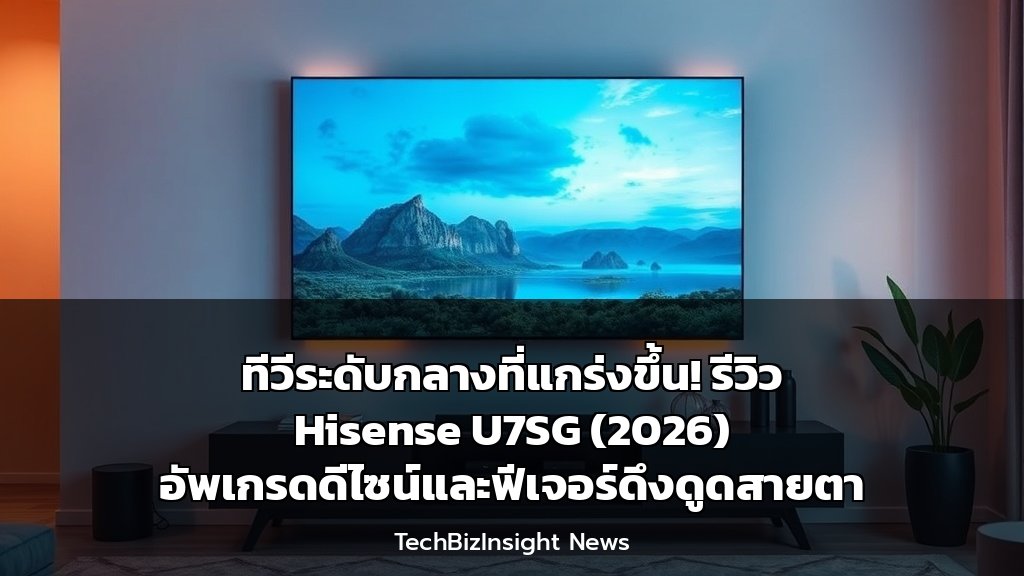
การแข่งขันในตลาดทีวีระดับกลางร้อนแรงขึ้นทุกปี และ Hisense ก็กลับมาพร้อมกับการอัพเกรดครั้งสำคัญสำหรับรุ่น U7SG ในปีนี้ แม้จะยังคงตำแหน่งทีวีระดับกลางแต่ก็ได้รับดีไซน์และเทคโนโลยีบางส่วนจากรุ่นไฮเอนด์มาประยุกต์ใช้ ส่งผลให้ได้ผลิตภัณฑ์ที่ดูพรีเมียมขึ้นและให้มูลค่าที่น่าสนใจสำหรับผู้บริโภคที่มองหาประสิทธิภาพสูงในงบประมาณที่จำกัดกว่า อย่างไรก็ตาม คู่แข่งรายอื่นก็ไม่หยุดนิ่ง ทำให้การตัดสินใจเลือกซื้อทีวีใน segment นี้ท้าทายยิ่งขึ้น
การอัพเกรดของ Hisense U7SG ในปีนี้สะท้อนให้เห็นกลยุทธ์ทางธุรกิจที่ชาญฉลาดในการใช้ซอฟต์แวร์และเทคโนโลยีเป็นตัวขับเคลื่อนมูลค่าเพิ่ม (Value Proposition) โดยไม่จำเป็นต้องลดราคาจนกระทบต่อมาร์จิ้นมากเกินไป
- การยกระดับประสบการณ์ผู้ใช้ผ่านซอฟต์แวร์: ระบบปฏิบัติการที่อัพเดตและโปรเซสเซอร์ภาพใหม่ไม่เพียงปรับปรุงความเร็วในการใช้งานเมนู แต่ยังเพิ่มความสามารถในการประมวลผลภาพแบบเรียลไทม์ (เช่น อัพสเกลภาพจากแหล่งข้อมูลคุณภาพต่ำ) ซึ่งเป็นฟีเจอร์ที่เคยสงวนไว้สำหรับรุ่นสูงกว่า สิ่งนี้สร้าง “ความรู้สึก” ของผลิตภัณฑ์พรีเมียมให้กับผู้ใช้โดยตรง
- ดีไซน์เป็นส่วนต่อขยายของแบรนด์: การลดขนาดขอบจอ (Bezel) และการออกแบบขาตั้งที่บางเฉียบ เป็นการลงทุนที่จับต้องได้ซึ่งช่วยยกระดับภาพลักษณ์ของผลิตภัณฑ์ทั้งไลน์ขึ้นมาได้ การวิจัยด้านการตลาดชี้ให้เห็นว่าดีไซน์ที่ดูแพงขึ้นมีผลอย่างมากต่อการตัดสินใจซื้อในร้านค้าปลีก
- การแข่งขันบนแพลตฟอร์มระบบนิเวศ: การเข้ากันได้กับมาตรฐาน HDR และระบบเสียงต่างๆ ที่หลากหลายมากขึ้น แสดงให้เห็นความพยายามของ Hisense ในการทำให้ U7SG เป็น “ศูนย์กลางความบันเทิง” ที่เข้ากันได้กับคอนเทนต์และอุปกรณ์หลากหลายแหล่ง ซึ่งเป็นกลยุทธ์สำคัญในการกักเก็บผู้ใช้ไว้ภายในระบบนิเวศของแบรนด์
- ความท้าทายจากสภาพตลาด: แม้จะมีอัพเกรด แต่คู่แข่งอย่าง TCL, Samsung และ LG ต่างก็ก้าวหน้าด้วยเทคโนโลยี Mini-LED และอัลกอริธึมซอฟต์แวร์ของตัวเองในราคาที่ใกล้เคียงกัน ความได้เปรียบทางการแข่งขันจึงอาจอยู่ที่รายละเอียดของซอฟต์แวร์ การอัพเดตระบบในระยะยาว (Long-term Software Support) และการรวมเข้ากับบริการสตรีมมิ่ง
โดยสรุป Hisense U7SG (2026) เป็นตัวอย่างคลาสสิกของการใช้เทคโนโลยีและซอฟต์แวร์เพื่อยกระดับผลิตภัณฑ์ในสายตาผู้บริโภคและสร้างมูลค่าเพิ่มทางธุรกิจ อย่างไรก็ตาม ในตลาดที่อิ่มตัวและเต็มไปด้วยนวัตกรรมอย่างรวดเร็ว การรักษาความได้เปรียบนี้จำเป็นต้องอาศัยการพัฒนาซอฟต์แวร์และระบบนิเวศอย่างต่อเนื่อง
Hisense U7SG TV Review (2026): A Strategic Upgrade in a Competitive Mid-Range Arena
Hisense has returned with a significant refresh for its popular U7 series television, the U7SG, for the current model year. While firmly positioned in the competitive mid-range segment, this iteration borrows strategic design cues and technological features typically reserved for higher-end models. The result is a television that feels more premium and offers compelling value for consumers seeking high performance without a flagship price tag. However, the mid-range TV market is more ferocious than ever, with competitors from TCL, Samsung, and LG constantly raising the bar, making the final purchase decision increasingly complex.
Analysis: The Business of Tech and Software in the Mid-Range TV War
The upgrades to the Hisense U7SG are a textbook example of how consumer electronics companies use software and targeted hardware improvements to enhance perceived value and maintain competitive margins.
- Software-Driven User Experience: The updated operating system and new image processor don’t just make menus snappier. They enable real-time image processing enhancements, such as more effective upscaling of lower-resolution content—a feature once exclusive to premium tiers. This directly creates a “premium feel” for the user, a critical psychological factor in product satisfaction and brand loyalty.
- Design as a Brand Investment: The move to thinner bezels and a more minimalist stand design is a tangible investment that elevates the entire product line’s aesthetic. Market research consistently shows that a more expensive-looking design significantly influences in-store and online purchase decisions, allowing Hisense to command a slight price premium or offer better perceived value at a given price point.
- Competing on Ecosystem Compatibility: By broadening support for various HDR formats and audio standards, Hisense is strategically positioning the U7SG as a versatile “entertainment hub.” This compatibility ensures the TV works seamlessly with a wide array of content sources and peripheral devices, a key strategy for keeping users within the Hisense ecosystem for longer.
- The Stiffening Competition: The primary challenge for the U7SG is the relentless innovation from rivals. Brands like TCL are aggressively pushing Mini-LED technology down into the mid-range, while Samsung and LG continue to refine their proprietary picture processing algorithms. In this environment, competitive advantage increasingly hinges on software nuances, long-term update support, and deep integration with popular streaming services and smart home platforms.
In essence, the Hisense U7SG (2026) represents a smart, calculated upgrade. It leverages software and design to deliver a noticeable step up in user experience, aligning with modern business strategies that use technology to enhance value perception. Success in this segment, however, is no longer guaranteed by hardware specs alone; it requires a sustained commitment to software excellence and ecosystem development.
For a detailed technical breakdown and comparison with key competitors, you can refer to the analysis by RTINGS.com.
FAQ
Q: สิ่งที่เปลี่ยนแปลงหลักของ Hisense U7SG รุ่นใหม่คืออะไร?
A: การอัพเกรดหลักอยู่ที่ดีไซน์ที่บางและพรีเมียมขึ้น ขอบจอที่บางกว่า การใช้โปรเซสเซอร์ภาพใหม่สำหรับการอัพสเคลและเกมมิ่งที่ดีขึ้น และการอัพเดตระบบปฏิบัติการเพื่อความรวดเร็วและฟีเจอร์ใหม่
Q: Hisense U7SG ยังคงเป็นตัวเลือกที่ดีที่สุดในงบประมาณระดับกลางหรือไม่?
A: U7SG เป็นตัวเลือกที่แข็งแกร่งมากโดยให้มูลค่าสูง แต่ไม่ใช่ตัวเลือกเดียวอีกต่อไป คู่แข่งอย่าง TCL รุ่น Q6/Q7 ที่ใช้ Mini-LED หรือ Samsung CU8000 ก็ให้ประสบการณ์ที่แตกต่างกัน การเลือกจึงควรขึ้นกับความสำคัญในด้านภาพเฉพาะเกม การออกแบบ หรือระบบปฏิบัติการที่ชอบ