เอ็กซ์เผิง (Xpeng) เปิดพรีออเดอร์ ‘รถบินได้’ กว่า 7,000 คัน เตรียมส่งมอบปี 2570 เริ่มผลิตปีหน้า
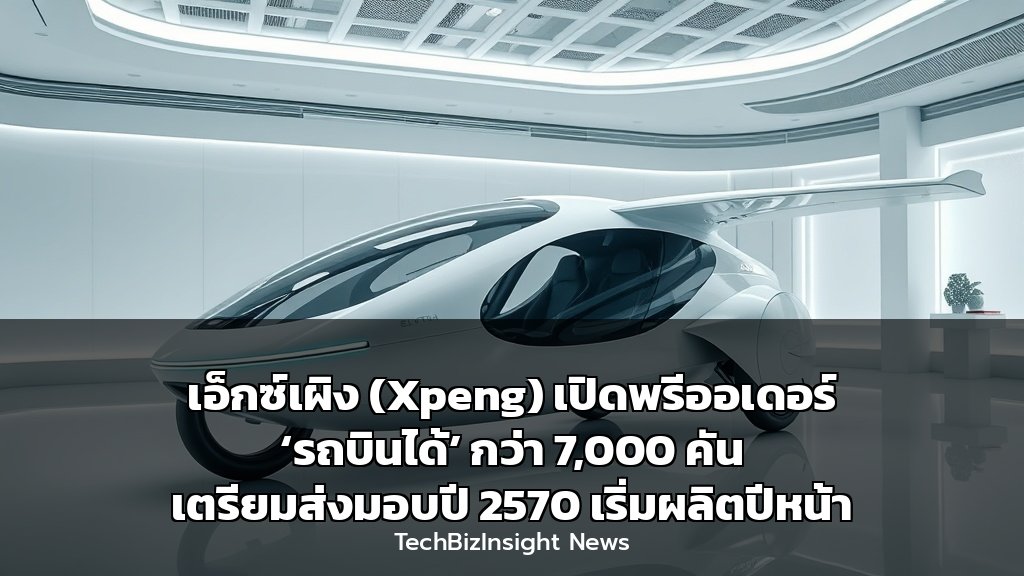
เอ็กซ์เผิง (Xpeng) ผู้ผลิตยานยนต์ไฟฟ้าชั้นนำของจีน ประกาศความคืบหน้าครั้งสำคัญในธุรกิจยานยนต์บินได้ โดย ‘ไบรอัน กู่’ (Brian Gu) ประธานบริษัทให้สัมภาษณ์กับสำนักข่าว Reuters ว่า Xpeng มีแผนเริ่มผลิตรถยนต์บินได้ในระดับอุตสาหกรรมภายในปีหน้า (2569) และคาดว่าจะเริ่มส่งมอบให้กับลูกค้าได้ในปี 2570 โดยปัจจุบันบริษัทมียอดจองซื้อ (Pre-order) สะสมมากกว่า 7,000 รายการแล้ว ความเคลื่อนไหวนี้สะท้อนให้เห็นถึงความก้าวหน้าของเทคโนโลยี eVTOL (Electric Vertical Takeoff and Landing) ที่กำลังเปลี่ยนผ่านจากแนวคิดสู่ความจริงเชิงพาณิชย์ และเป็นการตอกย้ำวิสัยทัศน์ของ Xpeng ในการเป็นผู้นำนวัตกรรมการเดินทางแห่งอนาคต
การประกาศครั้งนี้ไม่ใช่แค่ข่าวเทคโนโลยี แต่เป็นสัญญาณชัดเจนว่าตลาด ‘รถบินได้’ หรือ Flying Car กำลังจะกลายเป็นส่วนหนึ่งของอุตสาหกรรมยานยนต์และโลจิสติกส์อย่างเป็นรูปธรรม
- ผลกระทบทางธุรกิจ: ยอด Pre-order 7,000 คัน เป็นตัวเลขที่มีนัยสำคัญทางธุรกิจ เพราะหมายถึงกระแสเงินสด (Cash Flow) ที่ไหลเข้าสู่บริษัทล่วงหน้า ช่วยลดความเสี่ยงด้านการลงทุนในสายการผลิต และเป็นตัวชี้วัดความเชื่อมั่นของผู้บริโภคที่มีต่อเทคโนโลยีนี้
- กลยุทธ์เชิงพาณิชย์: Xpeng กำลังใช้กลยุทธ์ ‘First Mover Advantage’ เพื่อสร้างแบรนด์ให้แข็งแกร่งในกลุ่มลูกค้า High Net Worth ที่ต้องการความแตกต่างและความล้ำสมัย ซึ่งรถรุ่นนี้ไม่ได้มุ่งขายเป็น ‘พาหนะหลัก’ แต่เป็น ‘ไลฟ์สไตล์พรีเมียม’
- Softwarization of Vehicle: จุดแข็งของ Xpeng อยู่ที่ระบบซอฟต์แวร์อัจฉริยะและระบบช่วยขับขี่อัตโนมัติ ซึ่งจะเป็นหัวใจสำคัญของรถบินได้รุ่นนี้ การเชื่อมต่อข้อมูลแบบ Real-time การจัดการเส้นทางบินด้วย AI และระบบความปลอดภัยที่ใช้ Machine Learning จะเป็นปัจจัยที่ทำให้ผลิตภัณฑ์นี้แตกต่างจากคู่แข่ง
- ความท้าทายด้านกฎระเบียบ: แม้เทคโนโลยีจะพร้อม แต่โครงสร้างพื้นฐานทางอากาศ (Air Traffic Management) สำหรับยานพาหนะไร้คนขับหรือควบคุมระยะไกลยังต้องพัฒนาต่อไป การที่ Xpeng ประกาศแผนผลิตในปีหน้าสะท้อนว่าบริษัทมั่นใจว่าได้รับการสนับสนุนด้านนโยบายจากทางการจีนพอสมควร
FAQ (คำถามที่พบบ่อย)
1. รถยนต์บินได้ของ Xpeng จะต้องใช้ใบอนุญาตขับขี่พิเศษหรือไม่?
ปัจจุบันยังไม่มีข้อกำหนดชัดเจนในระดับสากล แต่คาดว่าในปี 2570 เมื่อเริ่มส่งมอบ ผู้ขับขี่น่าจะต้องมีใบอนุญาตนักบินส่วนบุคคล (Private Pilot License) อย่างน้อยในระยะแรก อย่างไรก็ตาม Xpeng พัฒนาระบบ Autopilot ที่อาจช่วยให้การควบคุมง่ายขึ้นและอาจลดข้อกำหนดลงในอนาคตเมื่อกฎหมายปรับเปลี่ยน
2. ราคารถยนต์บินได้รุ่นนี้จะอยู่ที่เท่าไร?
Xpeng ยังไม่เปิดเผยราคาอย่างเป็นทางการ แต่จากข้อมูลในอุตสาหกรรม รถยนต์บินได้ประเภท eVTOL ที่ผลิตในเชิงพาณิชย์จะมีราคาสูง โดยคาดการณ์ว่าราคาจำหน่ายอาจเริ่มต้นที่ 1-2 ล้านหยวน (ประมาณ 5-10 ล้านบาท) ซึ่งจัดเป็นสินค้าพรีเมียมสำหรับกลุ่มลูกค้าระดับบน
Xpeng, a leading Chinese electric vehicle manufacturer, has made a major announcement regarding its flying car business. Brian Gu, the company’s President, stated in an interview with Reuters that Xpeng plans to begin industrial-scale production of its flying vehicle within the next year, with first deliveries expected in 2027. The company has already amassed over 7,000 pre-orders for the vehicle, marking a significant milestone in the commercial viability of eVTOL (Electric Vertical Takeoff and Landing) technology. This move solidifies Xpeng’s ambition to become a dominant player not just in ground transportation, but in the future of personal aerial mobility.
This is not merely a technological showcase; it is a calculated business maneuver that signals a paradigm shift in the automotive and logistics industries.
- Revenue Model Shift: The 7,000 pre-orders represent more than just customer interest. They provide Xpeng with a substantial, interest-free cash flow buffer prior to mass production, reducing the financial strain of establishing new assembly lines. This model de-risks the venture significantly when compared to traditional automotive launches.
- Strategic Market Positioning: Xpeng is leveraging a “First Mover Advantage” to capture the High Net Worth Individual (HNWI) segment. The flying car is positioned as a luxury lifestyle product, not a replacement for conventional cars. This premium branding helps elevate the entire Xpeng portfolio value.
- The Software-Defined Vehicle (SDV) Core: Xpeng’s true competitive edge lies in its proprietary software stack. The flying car will rely heavily on AI-driven flight path management, real-time data fusion for obstacle avoidance, and over-the-air (OTA) updates. The software is the moat that will separate Xpeng from aerospace startups that lack automotive-grade software capabilities.
- Regulatory Feasibility: The decision to announce mass production next year implies confidence in China’s evolving regulatory framework for low-altitude economy. Xpeng likely has a close working relationship with the Civil Aviation Administration of China (CAAC), which is critical for achieving type certification for a flying vehicle.
For further details on the company’s financial outlook, you can review the original report from Reuters.