“เกมมิ่งแล็ปท็อปไร้การ์ดจอ” จาก ASUS กับชิป AMD ใหม่ล่าสุด
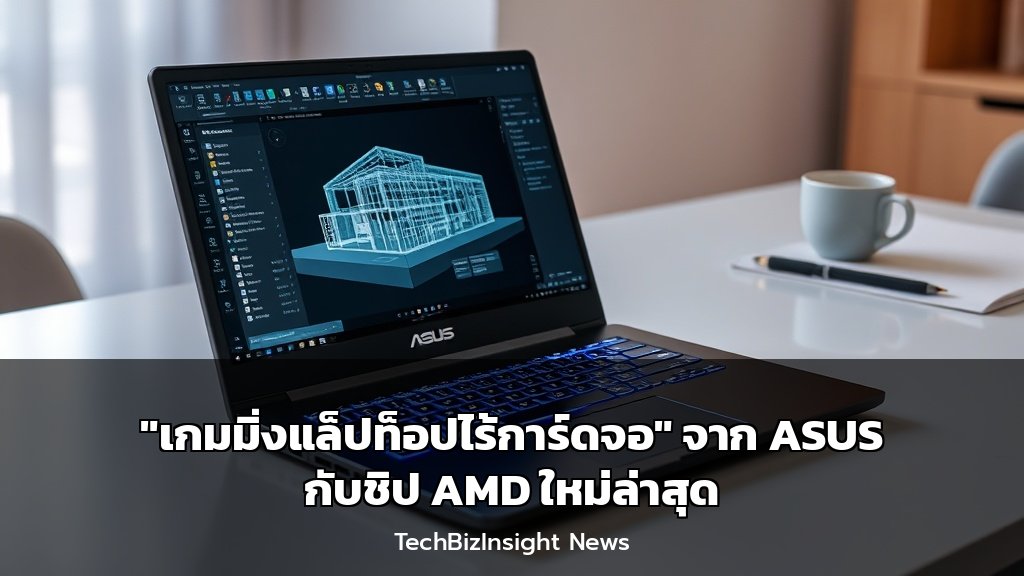
การมาถึงของ ASUS TUF Gaming A14 (2026) ได้สร้างความตื่นเต้นในวงการด้วยแนวคิดที่ท้าทายความเชื่อเดิม: แล็ปท็อปสำหรับเกมเมอร์ที่ไม่มีหน่วยประมวลผลกราฟิกแบบแยก (dGPU) แล็ปท็อปรุ่นนี้วางเดิมพันทั้งหมดบน APU Ryzen AI “Hawk Point” รุ่นล่าสุดจาก AMD ซึ่งรวม CPU, GPU และ NPU ไว้ในชิปเดียว การออกแบบนี้สัญญาว่าจะลดการใช้พลังงานและความร้อน พร้อมยืดอายุการใช้งานแบตเตอรี่ได้อย่างมาก อย่างไรก็ตาม จากบททดสอบประสิทธิภาพจริงพบว่า ASUS อาจยังไม่ได้ดึงศักยภาพสูงสุดของฮาร์ดแวร์ระดับแนวหน้าชิ้นนี้ออกมาได้อย่างเต็มที่ ทำให้เกิดคำถามถึงการปรับแต่งระบบและกลยุทธ์ทางธุรกิจเบื้องหลัง
การวิเคราะห์เชิงลึก: โอกาสและความท้าทายทางธุรกิจของ “All-APU” Gaming Laptop
การตัดสินใจของ ASUS ที่จะปล่อย TUF Gaming A14 ในรูปแบบไร้การ์ดจอแยก เป็นการเคลื่อนไหวทางธุรกิจที่ชาญฉลาดและมีความเสี่ยงในเวลาเดียวกัน นี่ไม่ใช่แค่การอัพเกรดสเปคตามปกติ แต่เป็นการรีเซ็ตแนวคิดผลิตภัณฑ์เพื่อตอบโจทย์ตลาดใหม่และกระแสเทคโนโลยีหลัก
โอกาสทางธุรกิจและข้อได้เปรียบเชิงกลยุทธ์:
* การลดต้นทุนและความซับซ้อนในการผลิต: การออกแบบโดยพึ่งพา APU เดียวช่วยลด Bill of Materials (BOM) ลงได้อย่างมีนัยสำคัญ โดยไม่ต้องจัดหาการ์ดจอจาก NVIDIA หรือ AMD มาเพิ่ม การจัดการซัพพลายเชนและสายการผลิตก็ง่ายขึ้น ซึ่งอาจส่งผลให้มีอัตรากำไรที่ดีขึ้นหรือสามารถตั้งราคาได้ดึงดูดกว่าในระดับสเปคใกล้เคียง
* การสร้างตลาดนิช (Niche Market) ใหม่: ASUS กำลังกำหนดนิยามใหม่ของ “เกมมิ่งแล็ปท็อป” ให้กว้างขึ้น โดยเล็งเป้าไปที่ผู้ใช้ที่ต้องการเครื่องที่มีประสิทธิภาพรอบด้านสำหรับทั้งการทำงานสร้างสรรค์ (Content Creation) ที่ใช้ GPU เร่งความเร็ว การเล่นเกมระดับกลางถึง casual gaming และการประมวลผล AI แบบ本地 (On-device AI) ด้วย NPU นี่คือการขยายฐานลูกค้าออกไปนอกเหนือจากเกมเมอร์ฮาร์ดคอร์แบบดั้งเดิม
* การเตรียมความพร้อมสำหรับอนาคตของ AI PC: การที่ AMD ใส่ NPU ความสามารถสูงไว้ใน APU Hawk Point นั้นสอดคล้องกับวิสัยทัศน์ของอุตสาหกรรมที่มองว่า AI จะทำงานบนอุปกรณ์ปลายทางมากขึ้น TUF Gaming A14 เป็นการทดสอบตลาดและสร้างความคุ้นเคยให้กับผู้บริโภคเกี่ยวกับความสามารถของ AI PC ก่อนที่ฟีเจอร์เหล่านี้จะกลายเป็นมาตรฐาน
* ข้อได้เปรียบด้านการตลาด: การเป็นหนึ่งในไม่กี่รุ่นที่ใช้ APU ล่าสุดของ AMD ในคอนเซปต์ “เกมมิ่งไร้ dGPU” สร้างจุดขายที่ชัดเจนและเป็นหัวข้อสำหรับการรีวิวและการพูดถึงในชุมชนเทค ซึ่งเป็น marketing buzz ที่มีค่า
ความท้าทายและจุดที่ต้องพัฒนาต่อ:
* การจัดการความคาดหวังของเกมเมอร์: ชื่อรุ่น “TUF Gaming” สร้างความคาดหวังด้านประสิทธิภาพการเล่นเกมระดับสูง การรีวิวที่ชี้ว่าเครื่องยังไม่สามารถดึงประสิทธิภาพสูงสุดของ APU ออกมาได้ อาจทำให้กลุ่มเป้าหมายหลักรู้สึกสับสนหรือผิดหวัง การสื่อสารการตลาดจำเป็นต้องชัดเจนว่าเครื่องนี้เหมาะสำหรับเกมประเภทใดและเปรียบเทียบกับคู่แข่งในระดับใด
* การปรับแต่งระบบ (System Tuning) และการระบายความร้อน: ประสิทธิภาพสุดท้ายของ APU แบบรวมศูนย์เช่นนี้ขึ้นอยู่กับความสามารถของ OEM ในการออกแบบระบบระบายความร้อนและโปรไฟล์พลังงานที่เหมาะสมอย่างยิ่ง ASUS จำเป็นต้องอัปเดตเฟิร์มแวร์และซอฟต์แวร์ (เช่น Armoury Crate) อย่างต่อเนื่องเพื่อให้ APU ทำงานใกล้เคียงศักยภาพทางทฤษฎีสูงสุด ซึ่งเป็นต้นทุนด้านวิศวกรรมซอฟต์แวร์ที่เพิ่มขึ้น
* การแข่งขันกับโมเดลเดิม: ภายในตระกูล TUF Gaming เอง หรือแม้แต่ในตลาดกว้าง ยังมีตัวเลือกที่มีการ์ดจอระดับล่างเช่น RTX 4050 ในราคาใกล้เคียง ซึ่งให้ประสิทธิภาพในเกมที่เหนือกว่าในปัจจุบัน สิ่งนี้ทำให้การเสนอขายต้องเน้นที่ข้อดีอื่นๆ เช่น การใช้งานแบตเตอรี่ที่นานขึ้น ความเงียบกว่า และน้ำหนักที่เบากว่า
* การพึ่งพาซัพพลายเออร์หลัก (AMD): กลยุทธ์นี้ทำให้ ASUS ผูกขาดกับโรดแมปและประสิทธิภาพของ APU จาก AMD มากขึ้น ซึ่งอาจมีผลต่อการวางแผนผลิตภัณฑ์ในระยะยาว
โดยสรุป ASUS TUF Gaming A14 (2026) เป็นมากกว่าผลิตภัณฑ์ใหม่หนึ่งรุ่น แต่เป็นการทดลองเชิงธุรกิจที่สำคัญ การตอบรับจากตลาดต่อโมเดล “All-APU” นี้ จะเป็นข้อมูลที่มีค่าสำหรับทั้ง ASUS และคู่แข่งในการกำหนดทิศทางของเกมมิ่งแล็ปท็อปในยุคที่ AI และประสิทธิภาพต่อวัตต์มีความสำคัญไม่น้อยไปกว่าคะแนนเฟรมเรตสูงสุด
ประเด็นสำคัญ
- ASUS TUF Gaming A14 (2026) ใช้ APU AMD Ryzen AI “Hawk Point” แบบรวมศูนย์ โดยไม่มี GPU แยก
- แนวคิดนี้มุ่งลดต้นทุน ลดการใช้พลังงาน และขยายกลุ่มลูกค้าไปยังผู้ใช้ที่ต้องการประสิทธิภาพรอบด้าน
- การรีวิวชี้ว่าเครื่องยังไม่ดึงศักยภาพของฮาร์ดแวร์ออกมาได้เต็มที่ สะท้อนความท้าทายในการปรับแต่งระบบ
- นี่คือการเคลื่อนไหวเชิงกลยุทธ์เพื่อทดสอบตลาดสำหรับ AI PC และสร้างตลาดนิชใหม่
FAQ
Q: ASUS TUF Gaming A14 (2026) เล่นเกม AAA ล่าสุดได้ไหม?
A: สามารถเล่นได้ที่การตั้งค่ากราฟิกระดับกลางถึงต่ำ และความละเอียด 1080p สำหรับเกมส่วนใหญ่ แต่อาจไม่เหมาะสำหรับเกมเมอร์ที่ต้องการเล่นเกม AAA ล่าสุดทุกเกมด้วยการตั้งค่ากราฟิกสูงสุดหรือความละเอียด 2K ขึ้นไป ประสิทธิภาพจะเทียบเคียงได้กับการ์ดจอระดับเริ่มต้น-กลาง
Q: ข้อดีหลักของการไม่มี GPU แยกคืออะไร?
A: ข้อดีหลักได้แก่ อายุการใช้งานแบตเตอรี่ที่ยาวนานขึ้นเนื่องจากใช้พลังงานน้อยกว่า ระบบทำความร้อนที่ง่ายและเงียบกว่า น้ำหนักและความหนาของเครื่องที่อาจลดลงได้ และต้นทุนการผลิตที่ต่ำลงซึ่งอาจสะท้อนมาที่ราคาขายปลีก
The Comprehensive Review: ASUS TUF Gaming A14 (2026) – A Strategic Pivot in Gaming Laptops
The launch of the ASUS TUF Gaming A14 (2026) has sent ripples through the industry by challenging a core tenet of mobile gaming: the necessity of a discrete graphics card (dGPU). This laptop bets everything on AMD’s latest Ryzen AI “Hawk Point” APU, a single chip that houses a CPU, integrated Radeon graphics, and a powerful NPU. This design promises significant gains in power efficiency, thermal management, and battery life. However, initial performance reviews indicate that ASUS may not have fully harnessed the potential of this cutting-edge silicon, raising questions about system optimization and the underlying business strategy.
In-Depth Analysis: The Business Implications of an All-APU Gaming Laptop
ASUS’s decision to release a dGPU-less TUF Gaming A14 is a calculated and risky business move. This isn’t a mere spec refresh; it’s a product category reset aimed at capturing new market segments and aligning with core tech trends.
Business Opportunities and Strategic Advantages:
* Reduced Cost and Manufacturing Complexity: Relying on a single APU significantly lowers the Bill of Materials (BOM) by eliminating the need to source a separate GPU from NVIDIA or AMD. This simplifies supply chain logistics and production lines, potentially leading to better margins or a more attractive price point for a given performance tier.
* Creating a New Niche Market: ASUS is redefining the “gaming laptop” to target a broader user base. It aims at professionals and creators who need a capable all-rounder for GPU-accelerated content creation, casual to mid-tier gaming, and on-device AI processing via the NPU. This expands the target demographic beyond traditional hardcore gamers.
* Positioning for the AI PC Future: AMD’s inclusion of a high-performance NPU in the Hawk Point APU aligns with the industry-wide vision of AI workloads shifting to the edge. The TUF A14 serves as a market test and consumer education tool for AI PC capabilities before they become ubiquitous.
* Marketing and Mindshare Advantage: Being one of the first to market with AMD’s latest APU in a “gaming sans dGPU” concept creates a clear unique selling proposition (USP) and generates buzz in tech communities, a valuable form of organic marketing.
Challenges and Areas for Development:
* Managing Gamer Expectations: The “TUF Gaming” moniker sets a high bar for performance. Reviews suggesting the system doesn’t fully leverage the APU’s potential could confuse or disappoint the core audience. Marketing must clearly communicate the ideal use cases and competitive positioning.
* Critical Importance of System Tuning and Cooling: The final performance of a centralized APU like this hinges critically on the OEM’s ability to design an optimal thermal solution and power profile. ASUS must commit to ongoing firmware and software (e.g., Armoury Crate) updates to push the APU closer to its theoretical limits, representing an added software engineering cost.
* Competition with the Established Model: Within the TUF family and the broader market, options with entry-level dGPUs like an RTX 4050 at similar price points currently offer superior gaming performance. This makes it essential to sell the other benefits: better battery life, quieter operation, and potential portability gains.
* Increased Reliance on a Key Supplier (AMD): This strategy deepens ASUS’s dependence on AMD’s APU roadmap and execution, which could impact long-term product planning flexibility.
In conclusion, the ASUS TUF Gaming A14 (2026) is more than just a new SKU; it is a significant business experiment. Market reception to this “All-APU” model will provide invaluable data for ASUS and its competitors in shaping the future of gaming laptops in an era where AI and performance-per-watt are becoming as crucial as raw frame rates.
For a detailed technical breakdown and benchmark comparisons, see the analysis from Notebookcheck.